6-Month Young Developer Specialization
Ages 10–15 • Grades 5–8 • Absolute beginner Free Demo Available

Young Python Developers — 6-Month Computer Science & Python Specialization

From Computer Basics to Python Games & Real Applications

A parent-friendly, live online specialization that takes absolute beginners from basic computer confidence to Python logic, Turtle games, practical data work and a guided desktop application showcase.

Learner LevelAges 10–15
Learning Plan24 Weeks
Planned Sessions72 Total
Monthly Projects6 Projects
Try One Live Session Before Enrolling: Attend a complimentary trial session to understand the instructor, teaching style, and interactive format before committing to paid monthly enrollment.
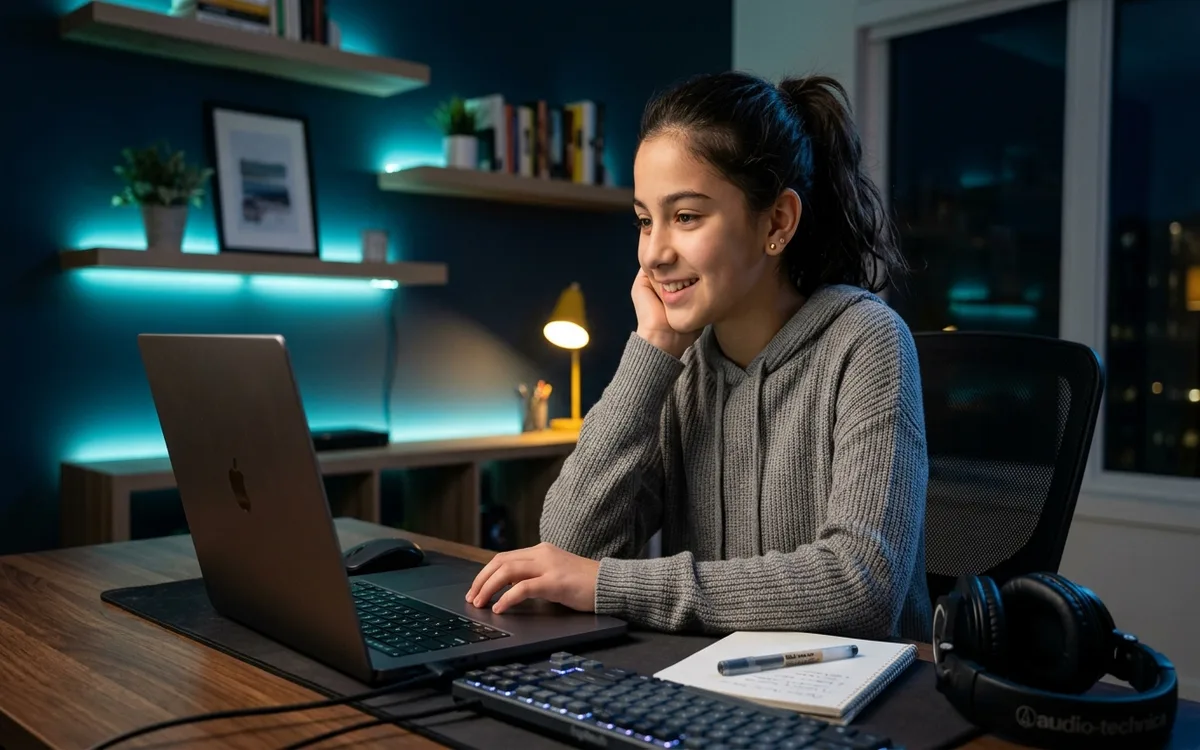
Young learner building a beginner Python Turtle game during a live online coding class
Live Online • Group or One-to-One

From Computer Basics to Python Games & Real Applications

Monthly Group Offer
Rs 10,000/monthRs 5,000/month
Free Trial
One-to-One:Rs 15,000/month
Schedule:3 planned live sessions/week
Session Length:60 minutes per session
Next Cohort:Confirmed with admissions
72 sessions are planned across 24 weeks. Exact dates, holidays and timetable are confirmed by admissions.
Duration

6 months

Classes / Week

3 planned live sessions/week

Session Length

60 minutes per session

Learning Format

Live Online • Group or One-to-One

Target Audience

Absolute beginners ages 10–15 (Grades 5–8)

Tuition Structure

Rs 5,000 / month

KEY CURRICULUM HIGHLIGHTS

A Structured First Step Into Real Coding

Young Python Developers is a live online computer science and Python specialization for school learners ages 10–15 in Grades 5–8. It begins with computer basics and safe digital habits, then develops algorithms, Python fundamentals, decisions, loops, Turtle graphics, functions, data, file handling and beginner desktop GUI skills. Every month ends with a visible project that learners can explain to a parent or guardian.

  • Designed for absolute beginners ages 10–15 in Grades 5–8
  • 24-week plan with 3 planned live sessions per week and 60-minute lessons (72 planned sessions total)
  • Six monthly projects: Digital Passport, Quiz, Turtle Scene, Turtle Game, Quiz Studio and guided GUI App
  • Learn → Build → Show method with regular project demonstrations
  • Explorer (Grades 5–6), Maker (~Grade 7) and Builder (Grade 8) support levels adapt scaffolding based on learner ability without changing the core pathway
  • Guardian communication, progress updates and one free parent-attended demo
MILESTONE CAPSTONE

Study Buddy, Quiz or Calculator Desktop App

Learners plan, build, test and present a guided Tkinter application that combines input, decisions, functions and structured data.

Verified Outcome

Guided application showcase with a learner explanation, one fixed bug and one next-step idea.

Free trial session before enrollmentRequest Demo
THE 6-MONTH LEARNING JOURNEY

Six Connected Months, Six Visible Projects

Each month builds on the previous one: computer confidence leads to Python logic, visual creation, practical data work and a guided desktop application showcase.

Approved 24-week teaching sequence. Three planned sessions per week equals 72 planned sessions; admissions confirms the exact timetable, holidays and start date.

Month 1

Computer Confidence & First Code

Weeks 1–4

Learning objective

Build computer confidence and understand that code is an ordered set of instructions.

Core chapters

  1. 1Computer basics, files and folders
  2. 2Safe internet and classroom habits
  3. 3Algorithms, pseudocode and flowcharts
  4. 4Python setup, print(), errors and debugging

Guided activities

File-and-folder challenge • Human algorithm game • Fix-the-error lab

Course project

Digital Passport

Course outcome

Run a first Python program and explain its sequence.

Parent-visible outcome

A personalised first program the learner can demonstrate.

Level: Explorer • Highly guided

Milestone: First code runs and the learner recognises a basic error message.

Month 2

Python Fundamentals & Decisions

Weeks 5–8

Learning objective

Use input, data and conditions to make a program respond.

Core chapters

  1. 1Variables and beginner data types
  2. 2Strings, output and f-string formatting
  3. 3User input and simple calculations
  4. 4if, elif and else decisions

Guided activities

Name-card generator • Mini calculator • Decision-tree challenges

Course project

Interactive Python Quiz

Course outcome

Build a playable text quiz with choices, feedback and a score.

Parent-visible outcome

A learner-led demonstration of input and decision logic.

Level: Explorer → Maker

Milestone: Trace a learner answer through a conditional branch.

Month 3

Logic, Loops & First Turtle

Weeks 9–12

Learning objective

Recognise repetition and translate a visual plan into code.

Core chapters

  1. 1Conditions and input validation
  2. 2for and while loops
  3. 3Nested repetition and beginner randomness
  4. 4Turtle coordinates, movement and drawing

Guided activities

Loop prediction cards • Coordinate treasure hunt • Turtle shape lab

Course project

First Turtle Scene

Course outcome

Draw a planned scene with coordinates and repeated movement.

Parent-visible outcome

A colourful graphical scene the learner can explain.

Level: Maker • Guided creation

Milestone: Choose correctly between a loop and a one-time instruction.

Month 4

Creative Turtle Art & Games

Weeks 13–16

Learning objective

Design reusable behaviours and interactive rules.

Core chapters

  1. 1Shapes, angles, colour and geometric art
  2. 2Functions for reusable drawing actions
  3. 3Random movement and event handling
  4. 4Keyboard controls and beginner game rules

Guided activities

Pattern remix • Function refactor • Keyboard-control challenge

Course project

Interactive Turtle Game

Course outcome

Build a keyboard-controlled game with rules and a replayable challenge.

Parent-visible outcome

A working game the learner can demonstrate and improve.

Level: Maker → Builder

Milestone: Explain how an event calls a function.

Month 5

Functions, Data & Practical Python

Weeks 17–20

Learning objective

Organise application data and separate work into reusable functions.

Core chapters

  1. 1Strings and lists
  2. 2Functions, parameters and return values
  3. 3Dictionaries for questions and scores
  4. 4Beginner file handling, testing and debugging

Guided activities

List organiser • Question-bank builder • Test-and-fix checklist

Course project

Python Quiz Studio

Course outcome

Create a multi-question quiz system with structured data.

Parent-visible outcome

A practical program with reusable logic and visible test results.

Level: Builder • Increasing independence

Milestone: Add a feature without rewriting the whole program.

Month 6

Desktop GUI & Final Showcase

Weeks 21–24

Learning objective

Combine prior skills in a small interface-based application.

Core chapters

  1. 1Tkinter windows, labels, buttons and entries
  2. 2User input, callbacks and event-driven behaviour
  3. 3Simple interface layout planning
  4. 4Plan, build, test and present

Guided activities

Paper wireframe • Callback practice • Peer test and showcase rehearsal

Course project

Study Buddy, Quiz or Calculator App

Course outcome

Complete and present a guided desktop application.

Parent-visible outcome

A final application showcase with a learner explanation and next-step idea.

Level: Builder • Guided capstone

Milestone: Demonstrate the app, explain one fixed bug and propose one improvement.

Month 6 Final Showcase

A guided Study Buddy, Quiz or Calculator desktop app combining input, decisions, reusable functions, structured data, testing and a beginner Tkinter interface. Scope is adapted to the learner level; no unsupported promise of independent mastery is made.

JOURNEY OVERVIEW

One Connected Path From First Click to Final App

This is not a collection of disconnected lessons. Each stage supplies the skills needed for the next project, while scaffolding reduces as learner confidence grows.

  1. 1

    Stage 1

    Computer confidence

  2. 2

    Stage 2

    Python fundamentals

  3. 3

    Stage 3

    Loops & Turtle

  4. 4

    Stage 4

    Creative games

  5. 5

    Stage 5

    Functions & data

  6. 6

    Stage 6

    Desktop showcase

THE SIX-PROJECT SHOWCASE

A Parent-Visible Build Every Month

Projects are teaching milestones, not guaranteed identical outputs. Complexity is adapted to age, pace and the Explorer, Maker or Builder support level.

Month 1

Digital Passport

A personalised first Python program that builds typing, file and run-code confidence.

Month 2

Interactive Python Quiz

A text quiz using input, calculations, conditions, feedback and a final score.

Month 3

First Turtle Scene

A colourful graphical scene built with coordinates, movement and repeated instructions.

Month 4

Interactive Turtle Game

A replayable keyboard-controlled game with reusable functions and clear rules.

Month 5

Python Quiz Studio

A structured question bank using functions, lists, dictionaries, testing and simple files.

Month 6

Study Buddy, Quiz or Calculator App

A guided Tkinter desktop application planned, tested and presented by the learner.

LIVE DELIVERY MODEL

24 Weeks With a Clear Weekly Rhythm

The academic plan is 24 weeks × 3 planned live sessions, equal to 72 planned sessions of 60 minutes. Admissions confirms the exact start date, time zone, holidays and any timetable adjustments before enrollment.

60 minutes

per planned session

24 weeks

six connected months

72 planned

live sessions

Two formats

group or one-to-one

LEARN → BUILD → SHOW
1

Learn

See a short explanation and live code demonstration with questions encouraged.

2

Build

Complete a guided challenge, debug mistakes and add an age-appropriate feature.

3

Show

Explain the project, demonstrate the result and reflect on one improvement.

DIFFERENTIATED SUPPORT

Explorer, Maker and Builder Levels

Learners follow the same core journey. The amount of starter code, independence and extension work adapts based on student ability, reading level, and typing confidence, not school grade alone.

Explorer

Grades 5–6 or learners who need gentle pacing and structured starter code

Teacher supplies roughly 60–80% starter code, with small guided edits and clear conceptual explanations.

Maker

Approximately Grade 7 or learners ready to complete larger code gaps

Teacher supplies roughly 30–50% starter code, then learners add logic, loops, and interactive features.

Builder

Grade 8 or readiness-qualified learners ready for extensions

More blank-canvas planning, independent debugging, and guided desktop application extensions.

PARENT PROGRESS & COMMUNICATION

Visible Progress, Clear Expectations

  • Monthly project evidence and a learner explanation of what was built
  • Attendance, participation and support needs communicated to the guardian
  • Next-step guidance based on observed work—not guaranteed outcomes
  • Schedule, holidays and any changes confirmed through admissions
SAFETY & GUARDIAN INVOLVEMENT

Built Around Guardian Consent

  • Guardian contact and consent are required for learners under 18
  • Parents or guardians may attend the free introductory demo
  • Only necessary admission and learning-fit information is requested
  • Public project work or images require authentic evidence and appropriate consent

International Students & Time Zones

Learners may request timing from Pakistan, UAE, Saudi Arabia, the UK or other regions. Country and time-zone details are collected in the demo form; admissions confirms a workable slot and international payment instructions. No unverified currency conversion is advertised.

Instructor Match & Verification

TechBuilt Open School assigns a programming instructor after reviewing learner level and availability. Admissions confirms the assigned instructor and timetable before enrollment, while the free demo lets the guardian assess communication, pace and teaching fit. We do not publish unverified credentials or guarantees.

PARENT RESOURCES

Evaluate the Fit Before You Enrol

Review the parent guide, compare live and recorded learning, or request one free parent-attended demo with no payment required for the trial.

Request Free Demo
IDEAL CANDIDATES

Who this Cohort is For

  • Absolute beginners ages 10–15 in Grades 5–8
  • Learners who need patient scaffolding from computer basics before text-based coding
  • Families seeking visible monthly projects and transparent progress communication
  • Students ready to graduate from Scratch/block coding into real Python syntax
STARTING REQUIREMENTS

Prerequisites & Preparation

  • No prior coding or computer-course experience required
  • A laptop or desktop capable of running a current browser and supported Python tools
  • Reliable internet plus a working microphone or headset
  • A parent or guardian available for admission, consent and progress communication
TRANSPARENT LEARNING EXPERIENCE

What Live Cohort Learning Means

We focus on genuine mentorship, scheduled accountability, and real programming practice. Here is what to expect in every session.

Live Instructor Teaching

Classes are conducted live online with real-time screen sharing and step-by-step code demonstration by the assigned programming instructor — not pre-recorded videos.

Guided Practical Coding

Students write code alongside the mentor during the session. Immediate hands-on exercises ensure concepts are practiced and retained right away.

Interactive Live Q&A

Ask questions during class, work through syntax and runtime errors, and receive feedback on guided practice and submitted work.

Structured Milestones

Progress through 6 distinct roadmap phases with concrete milestone outcomes and a comprehensive capstone project showcasing your actual code.

FEE TRANSPARENCY

Choose Group or One-to-One Learning

Both formats follow the same six-month core journey. Group learners follow a shared timetable; one-to-one learners receive individual pacing and scheduling. Attend one complimentary parent-attended trial before deciding.

One trial/demo session included before enrollment
Paid monthly at the current group cohort rate
Exact schedule, time zone and start date confirmed by admissions
Current Group Offer
Rs 10,000/monthRs 5,000/month

Group tuition is PKR 5,000/month under the current 50% offer

Ask questions on WhatsApp with Admissions
One-to-One Learning
Rs 15,000/month

Individual pacing and timetable, subject to instructor availability.

FREQUENTLY ASKED QUESTIONS

Questions About Young Python Developers

Clear, honest answers regarding curriculum, scheduling, fees, and the Free Demo trial session.

Is this suitable for a complete beginner with limited computer experience?
Yes. The pathway starts with keyboard confidence, files, folders, safe computer use, algorithms and the first Python program. No prior coding course is required. A laptop or desktop, reliable internet and guardian support are needed.
What ages and grades is the specialization designed for?
The core audience is ages 10–15 in Grades 5–8 only. Placement also considers reading level, keyboard confidence, attention and prior exposure, so admissions reviews fit during the demo process.
How many classes and projects are planned?
The academic roadmap plans 24 weeks with three 60-minute live sessions per week, equal to 72 planned sessions. Each month has a visible project. Exact dates, holidays and timetable adjustments are confirmed by admissions.
What will my child build during the six months?
The planned projects are a Digital Passport, Interactive Python Quiz, First Turtle Scene, Interactive Turtle Game, Python Quiz Studio, and a guided Study Buddy, Quiz or Calculator desktop app.
What is the difference between Explorer, Maker and Builder levels?
All learners follow the same core journey. Explorers (Grades 5–6) receive the most starter code and guided edits, Makers (approximately Grade 7) complete larger code gaps, and Builders (Grade 8 or readiness-qualified learners) receive more blank-canvas planning, debugging and guided desktop application extensions. Placement considers individual student ability, not school grade alone.
What are the group and one-to-one monthly fees?
The regular group fee is Rs 10,000/month and the current 50% group offer is Rs 5,000/month. One-to-one learning is Rs 15,000/month. International payment instructions are confirmed by admissions without advertising unverified exchange-rate conversions.
What does the free demo include?
It is one complimentary live trial session, not the full course. A parent or guardian may attend to evaluate instructor communication, teaching pace, learner fit and the online format before making a paid commitment.
How are parents updated about progress and safety?
Guardian contact and consent are required for minors. Progress is made visible through monthly project evidence, attendance and support communication. Public use of student work or images requires authentic evidence and appropriate consent.
Can students join from the UAE, Saudi Arabia, the UK or another country?
Yes, subject to a workable live timetable and instructor availability. The demo form collects country and time zone so admissions can confirm a suitable slot and international payment process.
Does completing the course guarantee independent mastery or a certificate?
Please contact admissions to confirm the current completion-document policy and its requirements.
How does this compare to Junior Coding Explorers?
Junior Coding Explorers is built for younger children in Grades 1–4 (ages 6–10) using Scratch block-based visual programming. Young Python Developers is designed for older learners in Grades 5–8 (ages 10–15) who are ready for real text-based Python syntax, Turtle graphics, and guided desktop applications.
OTHER ACTIVE COHORTS

Explore Other Live Programs

Scheduled group classes currently accepting students.

Young primary school learners engaged in creative visual block coding with Scratch during an online class
6-Month Junior Coding Specialization
Upcoming Cohort
Confirmed with parents before enrollment

Junior Coding Explorers — Scratch & Creative Coding

From First Click to First Game

A gentle, highly visual six-month journey for young learners in Grades 1–4. Using Scratch block coding and ScratchJr, children turn screen time into creative storytelling, animated art, and interactive games with guided live instruction.

Audience: Absolute beginners ages 6–10 (Grades 1–4)
Duration: 6 months
Schedule: Confirmed with parents before enrollment (Confirmed with parents before enrollment)
Cohort Status:Expressions of Interest Open

Timetables and tuition confirmed upon expression of interest

  • Designed specifically for young minds ages 6–10 in Grades 1–4 (no typing or prior coding required)
  • Visual block-based coding with Scratch and ScratchJr — engaging, intuitive, and fun
  • Two differentiated learning streams: Little Coders (Grades 1–2) & Junior Creators (Grades 3–4)
University learner working through structured 100 days Core Python programming in a professional workspace
Complete Python Series
Free Demo
3–4 classes/week

100 Days Complete Python

3 Learning Levels • 1 Complete Python Series (37 Live Lectures)

A structured 100-day intensive program delivering 37 comprehensive live lectures across 6 progressive phases — taking you from absolute fundamentals to advanced Python engineering.

Audience: Beginners, university students & career transitioners
Duration: 100 days
Schedule: 3–4 classes/week (1–1.5 hours per session)
Monthly Fee:
Rs 8,000/monthRs 5,000/month

Free trial session available before enrollment

  • 3 Learning Levels • 1 Complete Python Series (single unified program)
  • 37 structured live lectures with live instructor coding & screen sharing
  • 6 progressive phases covering syntax, OOP, files, and language internals
Professional developer writing Python automation and backend code on a modern dual-monitor workstation
Accelerated 45-Day Cohort
Admissions Guidance
Weekday (Mon–Thu, 8:00–9:00 PM PKT) or Weekend (Sat–Sun, 2:00–3:30 PM PKT)

Python FastTrack 45 — Live Online Python Course for Professionals

Accelerated Core Python for Working Professionals, Graduates & Researchers

An intensive 45-day live online program engineered for professionals, graduates, and researchers. Master practical Core Python syntax, data structures, modular file systems, and OOP through live instructor-led classes with evening, weekend, and one-to-one options.

Audience: Graduates, working professionals, career switchers & researchers
Duration: 45 days
Schedule: Weekday (Mon–Thu, 8:00–9:00 PM PKT) or Weekend (Sat–Sun, 2:00–3:30 PM PKT) (1 hour (Weekday) or 1.5 hours (Weekend))
Tuition Fee:
Rs 15,000 one-time

Admissions consultation and syllabus review available before enrollment

  • Accelerated 45-day intensive curriculum engineered for working professionals and researchers
  • Choice of Weekday evening (Mon–Thu 8–9 PM PKT) or Weekend afternoon (Sat–Sun 2–3:30 PM PKT) cohorts
  • Private one-to-one tuition available with customized scheduling and dedicated instructor attention
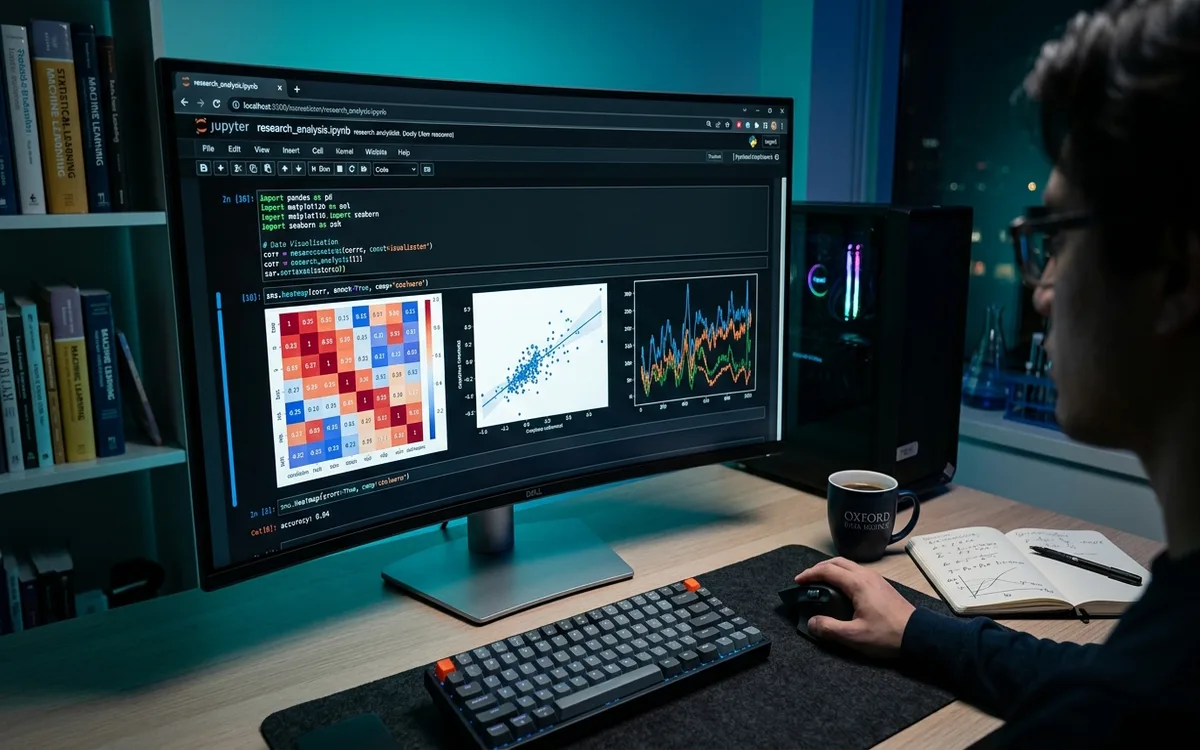
Scientific research and data analytics workstation with Python data analysis charts and Jupyter notebook
Data Analyst Cohort
Free Demo

Python • MySQL • Statistics • Power BI • 6 Portfolio Projects

A structured 6-month, 24-week, 96-class live program covering Python data work, MySQL, statistics, Power BI, and six portfolio checkpoints.

Audience: Students, graduates, professionals & career transitioners
Duration: 6 months
Schedule: 4 classes/week (1 hour per session)
Monthly Fee:
Rs 20,000/monthRs 10,000/month

Free trial session available before enrollment

  • 6 months • 24 weeks • 96 live classes
  • Python, NumPy, Pandas, cleaning, validation, EDA & visualization
  • MySQL business SQL: JOINs, subqueries, CTEs & window functions
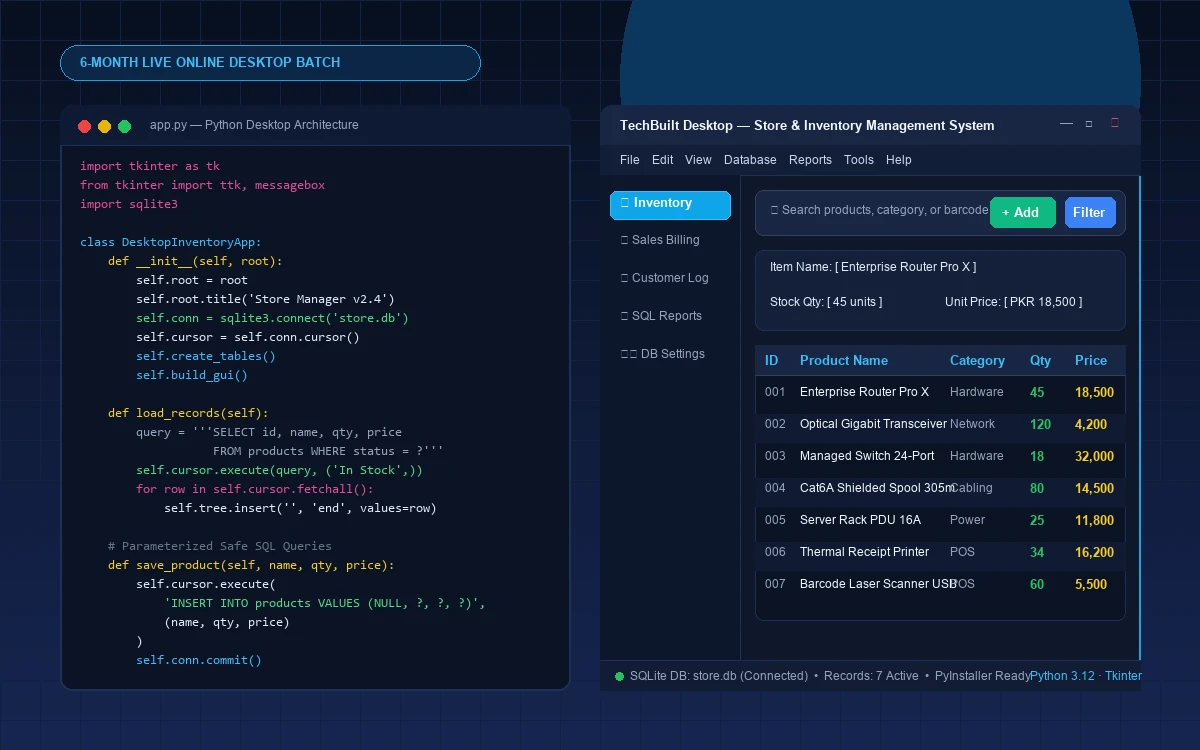
Student building a Python Tkinter and SQLite desktop application in an online live class
6-Month Live Specialization
Enrollment Inquiries Open

From Python Beginner to Building Real GUI & Database Applications.

A practical 6-month live online specialization for school and college beginners. Learn Python, design Tkinter desktop interfaces, integrate SQLite relational databases, and package real management applications.

Audience: Matric, FSc, ICS, O/A Level, college beginners and adult starters
Duration: 6 months
Schedule: 3–4 Live Classes/Week (60 Minutes Each)
Monthly Fee:
Rs 6,500/month

Admissions consultation and full syllabus review available upon request.

  • Comprehensive 24-week curriculum with 72 core live lessons (3–4 classes/week, 60 min each)
  • From Python fundamentals to visual Tkinter GUI widgets and multi-screen desktop interfaces
  • Relational database development with SQL, SQLite, and safe parameterized queries

Ready to start your learning journey?

Apply today and our admissions team will review your application and guide you through the next steps.

Monthly Fee
Rs 5,000/month